Organize Packing Cubes by Use, Not by Perfect Folding
Choose a simple packing-cube system that makes a small bag easy to open, repack and use during a trip.
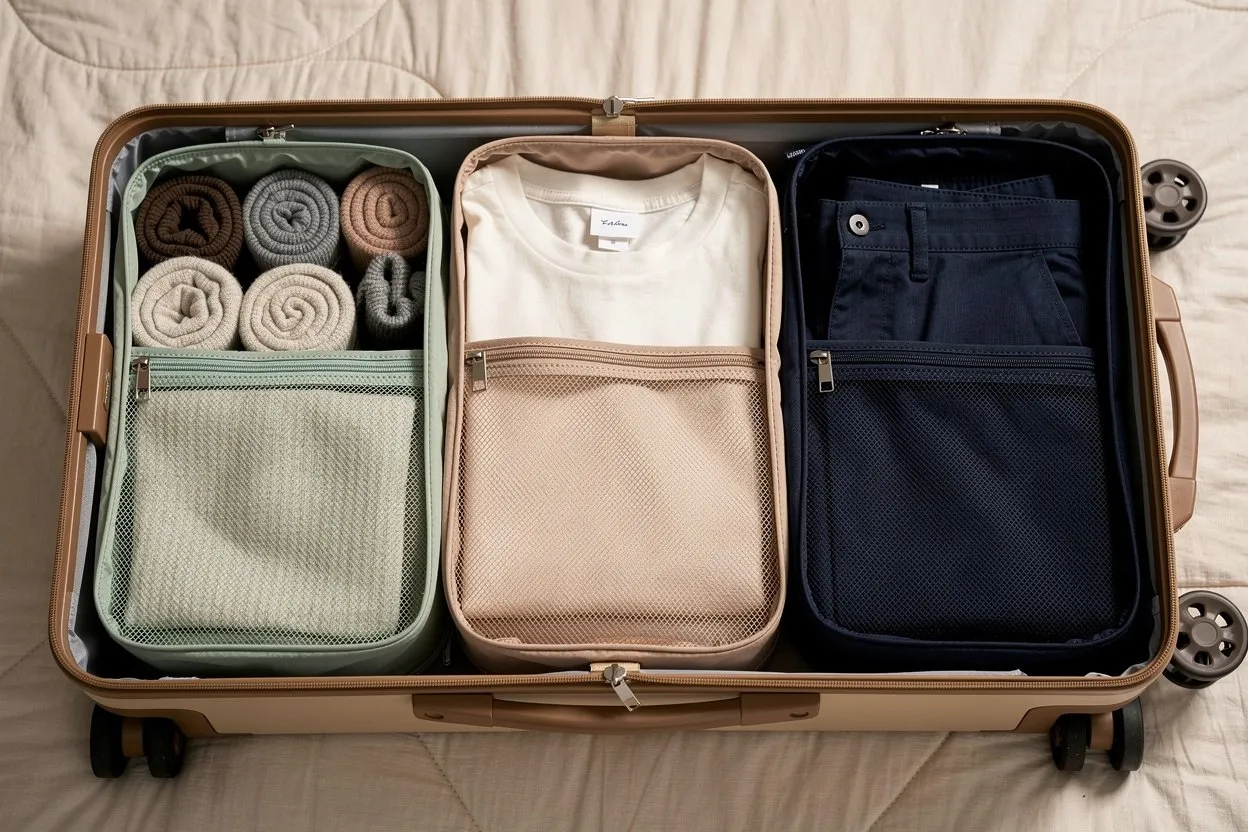
Packing cubes can make a bag easier to live out of, but they do not automatically reduce what you carry. A useful system lets you find an item, remove it and put things back without unpacking everything else. Before buying a matching set, test the idea with the pouches you already own. The best arrangement depends on your bag shape and how often you change accommodation.
Pick one organizing rule
There are three straightforward approaches: group by item type, by person or by activity. Item types work well for one traveler staying in one place: tops in one cube, underwear in another. Grouping by person helps with shared luggage. Grouping by activity can suit a trip where one outfit and its accessories need to come out together.
Avoid mixing all three rules without a reason. If some socks are with outfits and others are in a separate pouch, you may forget what is available. A small label or a different pouch color can help, but your system should remain understandable when you are tired and packing quickly.
Give frequently used items the easiest positions
Lay the empty bag flat and decide which section you can reach without disturbing the rest. Put your travel-day layer or overnight essentials there. Place less frequently used items deeper inside. A cube that fits a space perfectly may still be inconvenient if its zipper faces the bottom of the bag.
Use a smaller pouch for loose essentials that would otherwise migrate into corners. Avoid filling every gap before closing the bag: a completely packed shape is harder to repack after clothes have been worn. A little flexible space is more valuable than a photographically perfect arrangement.
Keep clean and used clothing distinguishable
Take a lightweight bag or reserve a compartment for worn clothing. If something is damp, let it dry before sealing it with other items where practical. A laundry bag separates contents; it does not solve moisture or clean clothing for you. Keep shoes and leaking toiletries away from fabrics even when all of them have their own outer pouches.
On a multi-stop trip, decide whether you will unpack fully. If you are staying only one night, a small overnight cube can prevent the whole bag from being opened. For a longer stay, moving cubes into a drawer may make sense, provided you remember to check the drawer when leaving.
Test the arrangement while standing up
Close the bag, lift it and carry it briefly. Reopen it upright if that is how you expect to use it on the journey. Check whether a cube has shifted, whether the weight feels balanced and whether you can find the item you need first. Adjust based on this test, not just the view from above.
Record the actual contents in the packing list. Use descriptions such as “small underwear cube” rather than “miscellaneous.” At the end of the trip, note which pouch you opened repeatedly and which you never touched. That observation is more useful than adding another organizer to a system that already has too many layers.